A Step-by-Step Guide to Safe and Effective Boom Lift Operation
Operating a boom lift is a critical skill for many professionals in construction, maintenance, and industrial settings. Whether you're using an articulating boom to navigate tight spaces or a telescopic boom for maximum height, proper operation is non-negotiable for safety and project success. This comprehensive how-to guide, brought to you by the experts at HIH Rentals, will walk you through the essential steps, from pre-operation checks to safe shutdown procedures.
Recent industry reports highlight a continued focus on operator training and equipment certification as key factors in reducing aerial work platform incidents. Partnering with a reputable aerial equipment rental provider like HIH Rentals, which ensures all its boom lifts and scissor lifts meet stringent ANSI standards, is the first step toward a safe worksite.
Step 1: Pre-Operation Inspection & Planning
Never skip the pre-start checklist. This is your first line of defense.
- Site Assessment: Walk the work area. Identify hazards like overhead power lines, uneven ground, slopes, and debris. Ensure the ground can support the machine's weight.
- Machine Inspection: Conduct a thorough visual check. Look for fluid leaks, tire damage (if applicable), and structural issues. Test all safety devices, including guardrails, harness attachment points, and emergency controls.
- Function Test: With the machine on stable ground and the platform lowered, start the engine or power system. Test all ground controls, drive functions (forward/backward, steering), and lift/lower/extension functions at a low height.
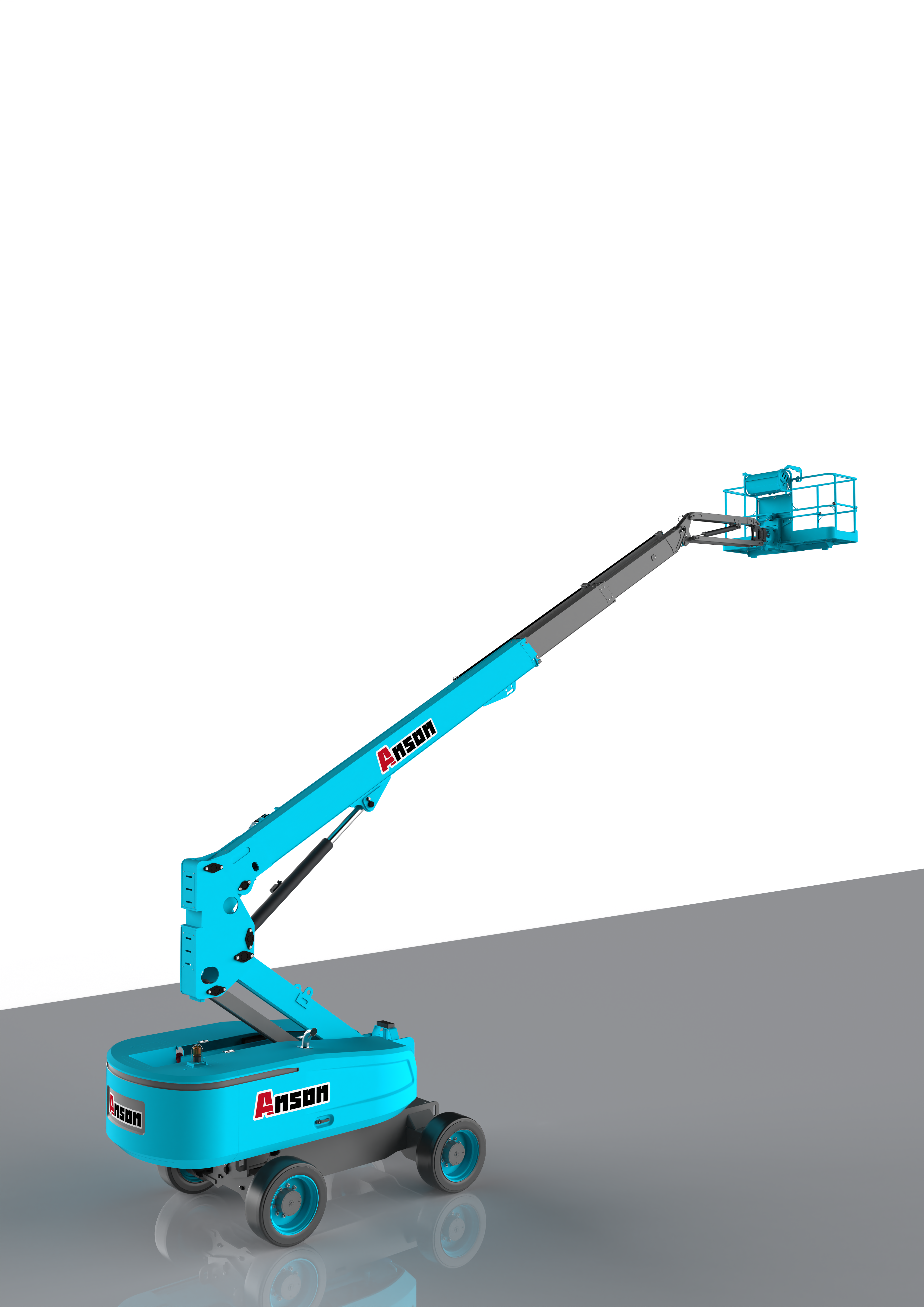
A Self-propelled Articulating Boom Lift from the HIH Rentals fleet, ideal for navigating around obstacles. All our equipment undergoes rigorous pre-rental inspections.
Step 2: Personal Protective Equipment (PPE) and Entry/Exit
Proper PPE is mandatory. This includes a hard hat, high-visibility vest, and, most critically, a full-body harness with a lanyard that must be attached to the designated anchor point inside the platform at all times.
Always maintain three points of contact when entering or exiting the platform. Face the machine, and never jump from the platform. Ensure the platform is fully lowered to the access position before getting on or off.
Step 3: Operating Controls and Maneuvering
Familiarize yourself with the controls. Most modern boom lifts have dual controls – one set in the platform and one on the ground or chassis.
- Platform Controls: Use these for primary operation. Remember the "slow and low" principle: move slowly and avoid raising the platform while driving.
- Driving: Look in the direction of travel. Be aware of the machine's tail swing. For crawler scissor lift models, be mindful of track positioning on sensitive surfaces.
- Lifting/Positioning: Avoid sudden movements. Do not exceed the platform's rated capacity or the maximum wind speed limit. For telescopic booms, extend smoothly and be aware of the changing center of gravity.
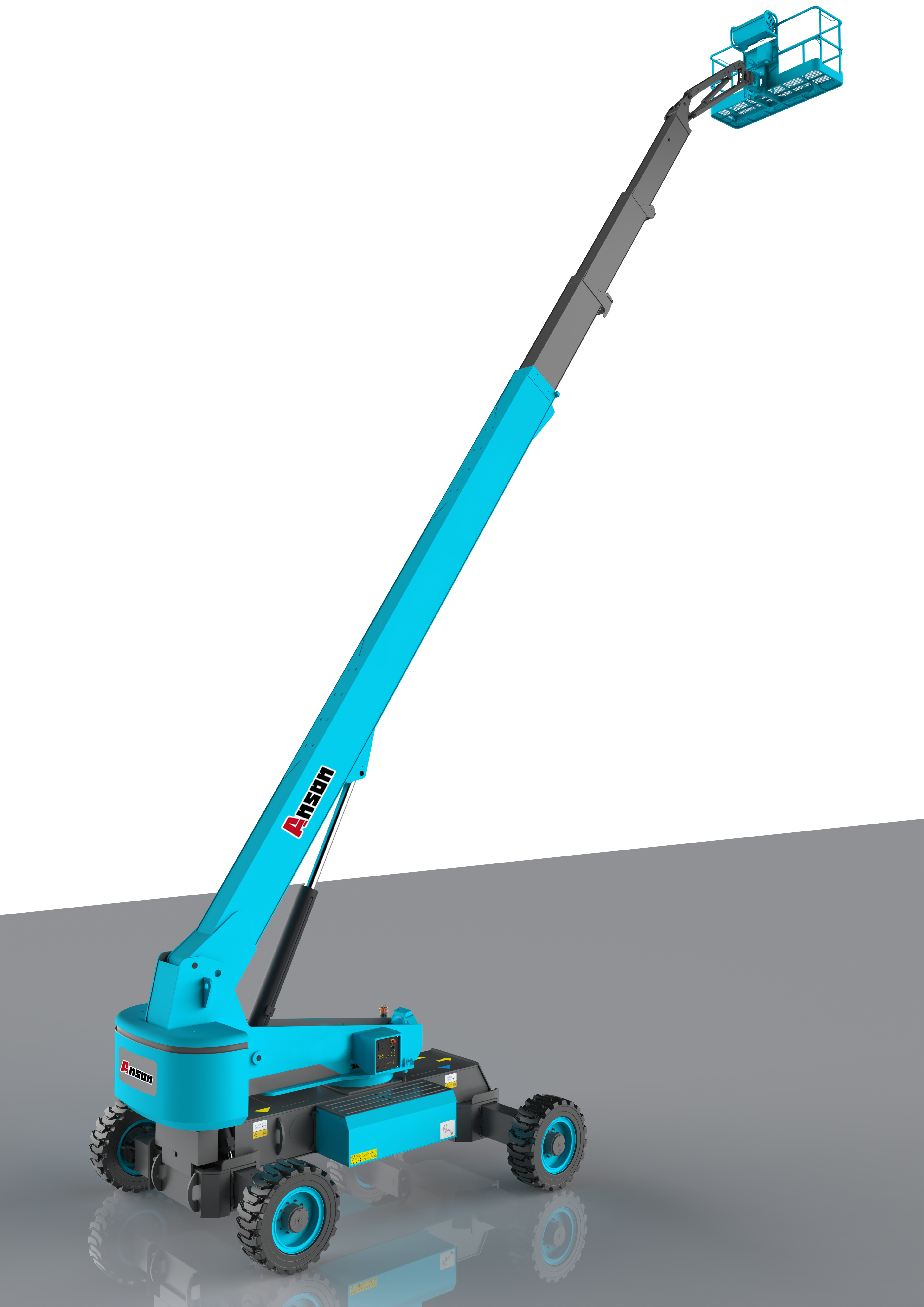
Operating a Self-propelled Telescopic Boom Lift requires understanding its extended reach. HIH Rentals provides clear operational manuals and quick-reference guides with every rental.
Step 4: Working at Height & Hazard Awareness
Once at height, your awareness must heighten.
- Stability: Never drive with the boom elevated. Set the brakes when stationary. Use outriggers if the machine is equipped with them and the manufacturer's instructions require it.
- Overhead Hazards: Maintain a safe distance (at least 10 feet) from electrical sources. Assume all lines are energized.
- Fall Protection: Your harness lanyard is your lifeline. Keep it short to prevent a potential swing fall.
- Communication: Use hand signals or radios to stay in contact with your ground spotter, especially in noisy environments or when your view is obstructed.
Step 5: Shutdown, Parking, and Post-Use Inspection
Properly concluding your work is as important as starting it correctly.
- Retract the boom fully and lower the platform to its stowed position.
- Drive the machine to its designated parking area—a level, stable surface away from traffic and edges.
- Shut off the engine/power, remove the key, and secure the machine.
- Perform a quick post-use visual check for any new damage or issues that need reporting to your supervisor or the equipment rental company.
Why Choose HIH Rentals for Your Boom Lift Needs?
Following this guide is easier when you have reliable equipment. At HIH Rentals, we don't just provide aerial equipment; we provide peace of mind.
- Certified & Inspected Fleet: Every boom lift and scissor lift in our fleet, including our electrical scissor lift options for indoor use, is maintained to the highest standards and comes with relevant ANSI certification documentation.
- Expert Consultation: Unsure if you need an articulating or telescopic boom? Our team helps you select the perfect machine for your specific job site challenge, whether it's equipment rental or exploring equipment sale options.
- Commitment to Safety: Our dedication is reflected in our well-maintained aerial equipment and our willingness to share knowledge. We are your partner in getting the job done safely and efficiently.
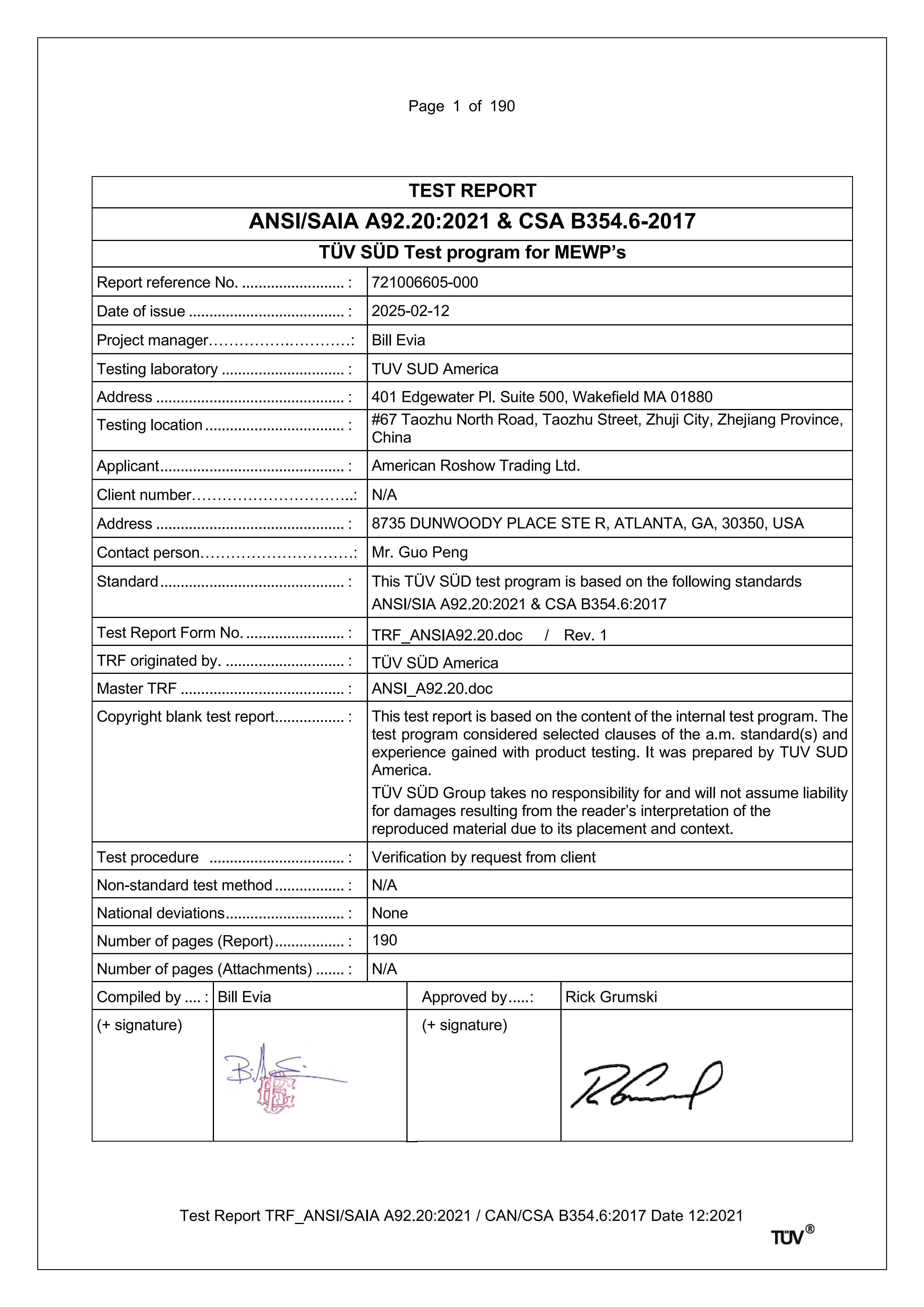
Sample ANSI Certificate for equipment from HIH Rentals, underscoring our commitment to safety and compliance.
Mastering boom lift operation is a continuous process of vigilance, training, and using the right tool for the job. For your next project requiring aerial equipment rental, trust the specialists at HIH Rentals to equip you with the best machinery and the knowledge to use it safely.
Ready to Reach New Heights Safely? Contact HIH Rentals today to discuss your project needs, get a quote, or learn more about our comprehensive aerial equipment solutions.
📞 Phone/WhatsApp: +1 9094090767
📧 Email: social@hihrentals.com
🌐 Website: www.hihrentals.com
📍 Address: 8616 Cherry Ave, Fontana, CA 92335